In this page
In short
- A cup costs its beans, milk, extras, cup and lid, each at its price before VAT.
- Compare the cost with the selling price before VAT (15%), not after it.
- Work it out again whenever a supplier changes a price: one riyal more on a litre of milk can mean hundreds of riyals a month.
What goes into a cup

A cup costs only what goes into it: the ingredients used to make it, and the packaging that leaves with it.
- Beans: the grams in a single or a double shot.
- Milk: the millilitres in the cup, which differ between a small and a large.
- Extras: syrups, an extra shot, a plant milk.
- Packaging: the cup and lid, and the carrier or bag on a takeaway.
Rent, salaries and electricity are not part of a cup’s cost. They are the month’s costs, paid for out of the difference between a cup’s price and its cost.
Worked example: a 12 oz latte
The prices in this example are made up to show the sum, so put your own invoice prices before VAT in their place.
| Ingredient | Used | Bought at | Cost |
|---|---|---|---|
| Beans | 18 g | SAR 120 a kilo | SAR 2.16 |
| Milk | 220 ml | SAR 7 a litre | SAR 1.54 |
| Cup and lid | 1 | SAR 0.50 | SAR 0.50 |
| Cost of the cup | SAR 4.20 | ||
Sold at SAR 18 with VAT, the cup’s price before VAT is SAR 15.65. The cup’s cost is 27% of the price, and SAR 11.45 is left from each cup before the month’s costs.
Why before VAT
VAT in Saudi Arabia is 15%: money you collect for the state and pay to the Zakat, Tax and Customs Authority, so it is not your income. Compare the cost with SAR 18 instead of 15.65 and you see 23% instead of 27%, and a profit bigger than it is.
The same goes for what you buy: cost your ingredients at their invoice prices before VAT, because a VAT-registered business deducts the VAT on its purchases from the VAT it pays.
Extras change the sum
Every extra has its own cost. For example, oat milk at SAR 14 a litre makes 220 ml cost SAR 3.08 instead of 1.54 for regular milk: SAR 1.54 more. Charge SAR 3 for it with VAT, which is 2.61 before VAT, and you cover the difference with SAR 1.07 to spare.
- An extra shot: more grams of beans.
- A syrup: the millilitres in one pump.
- A large: more beans and milk, and a bigger cup.
When a supplier raises a price
Say you use 20 litres of milk a day and your supplier puts a litre up by one riyal: 20 litres × 30 days × SAR 1 = SAR 600 a month out of your profit, with nothing changed on the menu.
So work out your items’ costs again whenever an invoice comes with a new price, then decide: change the price, the amount, or the supplier.

How dots POS works it out
In dots POS you write the recipe for each item and each extra once, and its ingredients come off your stock with every sale.
- Each ingredient costs the average of what is on the shelf at its price before VAT, updated by every supplier invoice you receive.
- When a price rises, an item’s cost moves with the first invoice at the new price, by how much you received compared with what was still on the shelf.
- The menu performance report shows each item’s margin, and which items earn you most.
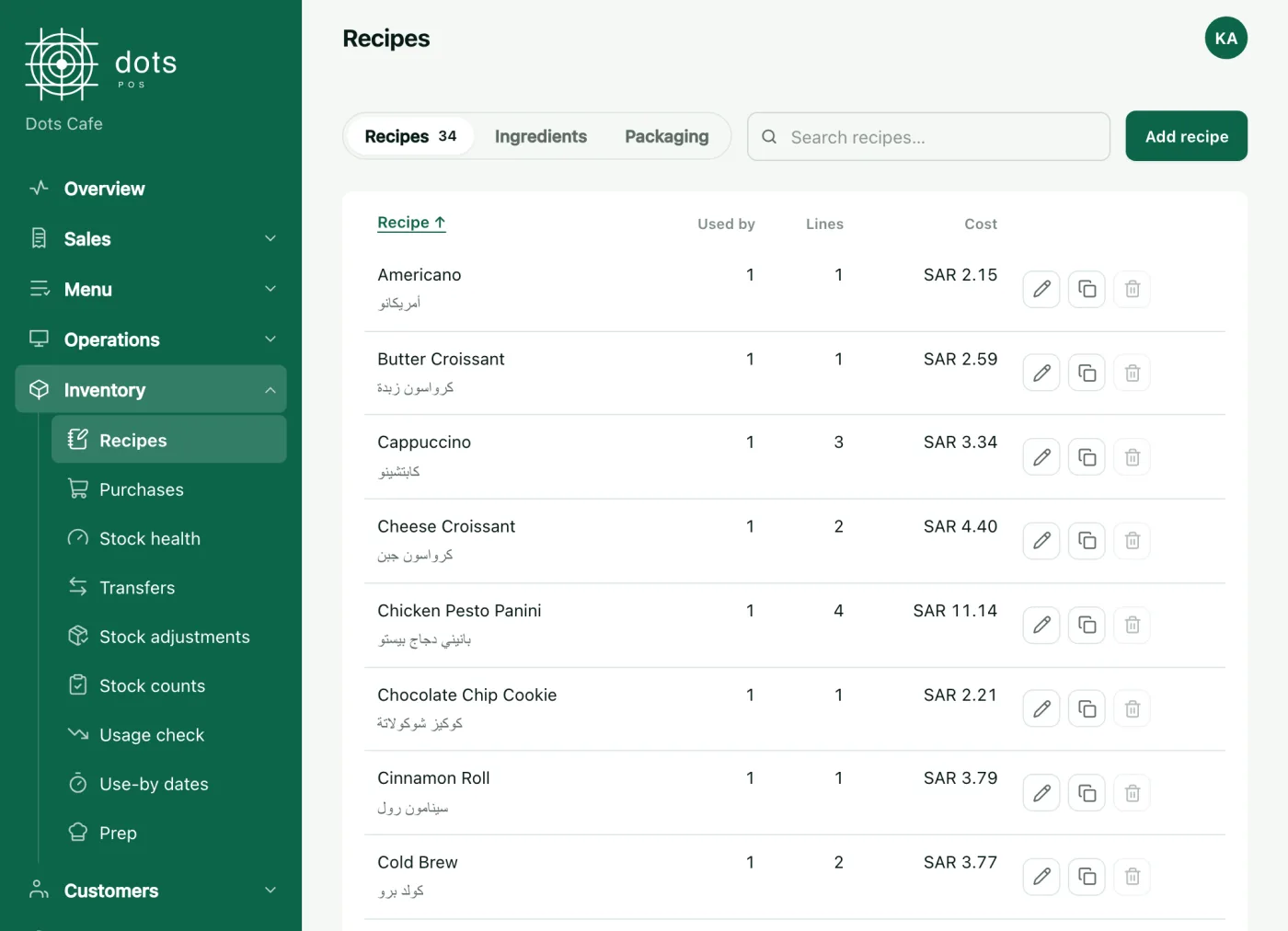
Recipe costs are in the POS+ plan, and each item’s margin in POS Advanced.
Questions
Do I count wasted cups in the cost?
Record waste on its own, then spread it over your items when you review the month. If you throw away one cup in 50, add about 2% to the cup’s cost.
How often should I work out my items’ costs again?
Whenever a supplier changes a price. In dots POS the cost updates with every supplier invoice you receive.
Do I add rent to the cost of a cup?
No. Rent and salaries are the month’s costs, paid for out of the difference between price and cost.
Source: The Recipes and Menu performance screens in the dots dashboard, and the Zakat, Tax and Customs Authority for the VAT rate.